Drone Paintings: On Technological Misuse
and Emergent Authorship
 The integration of technology into the arts has unfolded in an almost mystical way—
technological objects are often perceived like crystal spheres, miraculously producing
images, sounds, or movements as if by magic. This perception feeds into a growing
narrative of outsourced authorship, where creative agency is seemingly handed over to the machine.
Rather than attributing creativity to machines, this new form of technological
art reflects a shift in the artist’s role, where the artist becomes a hacker—an interloper
reprogramming or misusing tools that were originally engineered for efficiency and task
execution. Instead of aiming for control and precision, the artist intervenes in the
system’s functionality, exploiting its limits to generate genuinely unexpected results.
In this way, misuse becomes a form of literacy—a method of artistic inquiry.
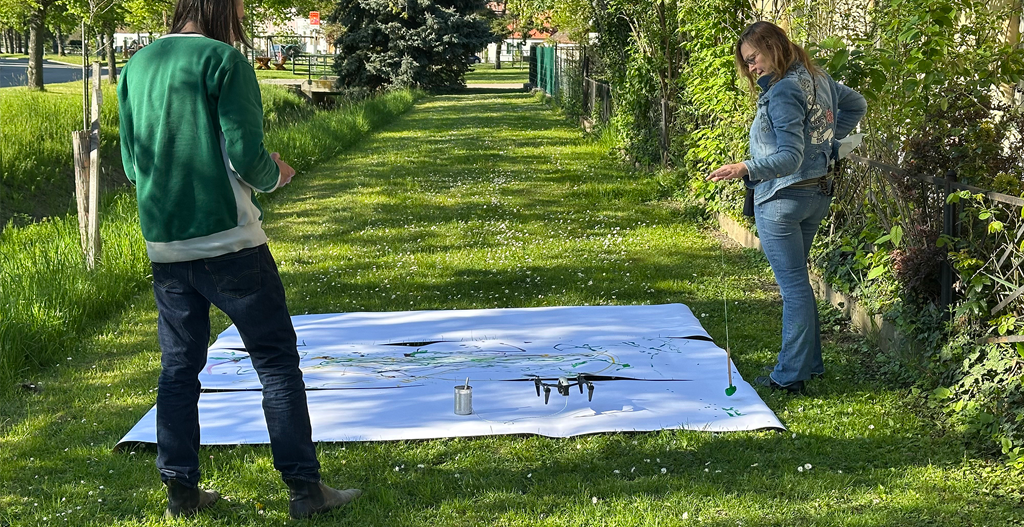
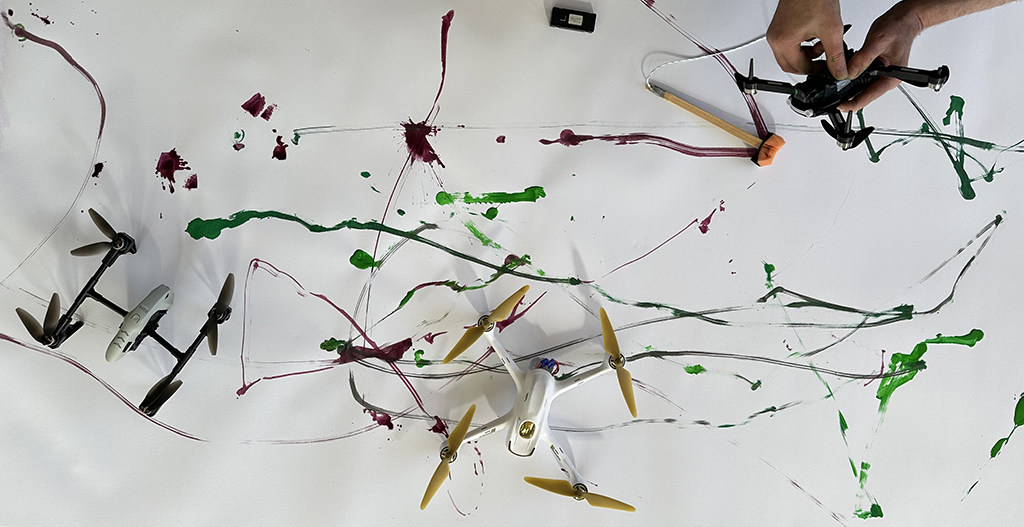
The Drone Paintings by Max Moswitzer, created in collaboration with Margarete
Jahrmann and Stefan Glasauer exemplify such an approach. Four commercially
available Chinese drones—Hubsan H501S X4, LSRC KS66, 4DRC M2S, and Eachine
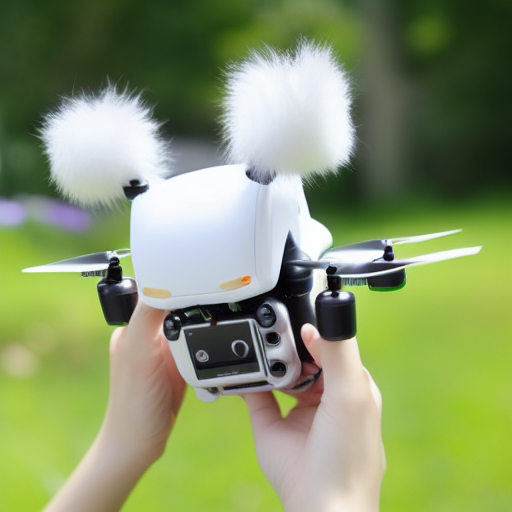
E013—were transformed into ludic objects, affectionately renamed Tina, Rotkäppchen,
Traktor, and Frankenstein. Upgraded with brushes and tasked with painting while
flying, their aerodynamic behavior was disturbed by the weight and drag of the
added tools. As a result, the drones failed to follow their programmed flight paths.
This „failure“ is where the artwork begins. The drones’ inability to execute their
predefined trajectories gives rise to new, emergent compositions. Through the
entanglement of digital instructions and physical interference, the act of drawing
becomes an unpredictable output.
Zeynep Aksoez. Critical AI architect, curator and theorist.